
Plinko Casino UK: Games, Risks and Licensing
 Available in GB
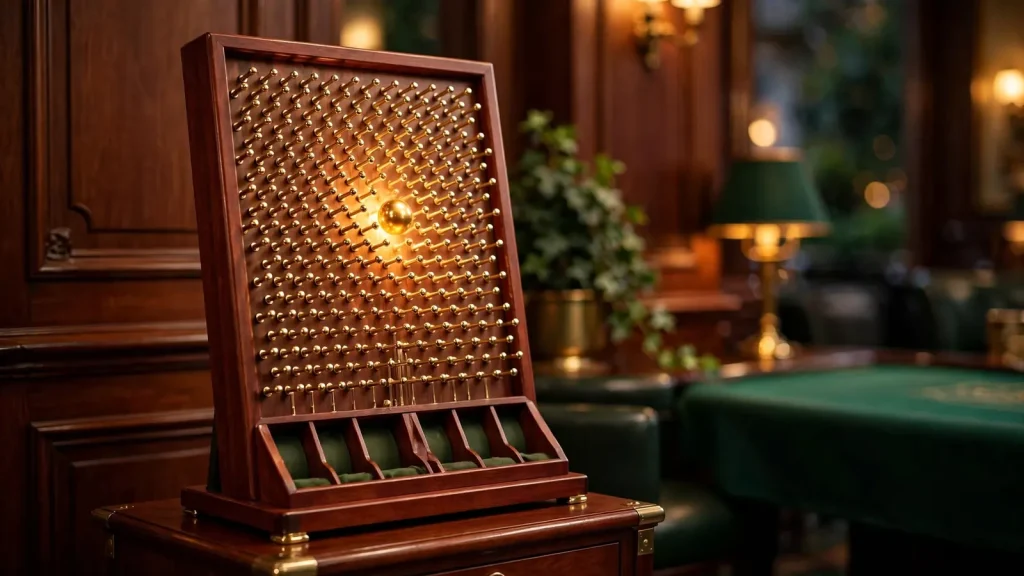
A practical guide to finding Plinko, understanding UK licensing, and separating demo play from real-money risk.
Finding Plinko in an Online Casino
When you come across Plinko in an online casino, the first thing to pin down is what that phrase actually tells you: someone is presenting a game called Plinko within an online casino setting. It does not, by itself, tell you which operator offers it, whether it is available to every visitor, or what the game looks like once opened. Those details need to come from the casino’s own current information, not from a familiar-sounding label.
That distinction matters because online casino games are available where permitted by law, but a search for a particular title is not proof that it is offered everywhere. In the UK, online gambling is legal at licensed and regulated sites. So the sensible starting point is not a promise that you will find Plinko on any casino homepage; it is checking what the site actually lists and whether you can access that offering.
I used to treat a game name as if it were a reliable shortcut. If I saw it in a headline, I assumed it would be waiting in the lobby, ready to open. That assumption is easy to make and easy to get wrong. A casino page can use a title in a general description, while the game catalogue itself may show something different. Or the name may appear in a search result without telling you whether the game is currently available at the site.
What “finding” the game involves
Online, you are not walking past a physical machine or asking a member of staff where a game is. You are interpreting a website: its lobby, game categories, search tools and individual game pages. A useful check is to look for the title within the casino’s own catalogue, then open the listing and read what the site says about access. That is more informative than relying on a short promotional phrase.
The wording can vary too. You may see Plinko described as a casino game, or encounter a phrase that calls it a slot. Those labels are not enough to establish the exact format or features. I would avoid deciding what to expect from the name alone. If the page does not explain the game clearly, that is a reason to pause rather than fill in the blanks from assumptions.
Monopoly Live casino in the UK: how it works
This is also why “best online Plinko casino” is not a complete description of what you need. Best according to what? A site could be praised for its overall presentation while offering no clear information about the particular game you came to find. Another might show a title prominently without explaining access conditions. A confident ranking does not answer those practical questions for you.
I now separate the general casino experience from the one title I’m looking for. First, I check whether the site is an online casino operating where online gambling is permitted. Then I look for the game itself in the site’s own information. I do not take a comparison page, advert or broad claim as confirmation that a specific title is currently available. Small distinction. Useful one.
Reading the site, not the slogan
A casino website can make a game sound simple to find, but the useful details are usually in the actual catalogue or game page. Does the listing name Plinko directly? Does the page explain what happens when you select it? Is the information consistent across the lobby and the game’s own description? If those answers are unclear, you still do not know enough to say that the site offers the experience you expected.
There is no need to turn that check into a research project. A clear listing and a working route to the game are more meaningful than a page packed with claims about how exciting or popular it is. I have clicked through plenty of polished pages that told me more about the sales pitch than the product. That is not a reason to distrust every casino page; it is a reason to read the part that describes the game.
The same goes for wording such as “Plinko slot”. It may be how a page groups or markets the game, but the phrase alone does not verify that it behaves like a particular kind of slot. Treat the description as a starting point, not a technical explanation. If the site gives no detail beyond the label, you cannot reliably infer more from it.
Do
- Look for the title in the casino’s own catalogue
- Read the site’s own information about access
- Check if the site is operating where permitted by law
Don’t
- Rely on promotional phrases or headlines
- Assume a game is available based on a label
- Fill in the blanks from assumptions if descriptions are unclear
An online casino is a website or service through which casino games can be accessed where permitted by law. That online setting changes how you encounter a game: you find it through digital listings and descriptions rather than a physical venue. It does not make every claim on a page more precise, and it does not make a title universally available.
So, if you are trying to find Plinko online in the UK, keep the expectation modest and the check direct. Look at the casino’s own current catalogue, read the game description, and make sure the site is operating within the rules that apply. A title in a headline is not the same as a confirmed listing. That’s the plain version.
Where Plinko Sits Among Casino Games
Casino menus can make very different games look like one big catalogue. I find it helps to sort them by how play is organised, rather than by the pictures, theme or label on a tile. The broad distinctions are between random-number games, gambling machines and table games. A game’s name alone does not tell you which category it belongs in.
Casino Games: Slots, Live Tables and Game Guides
Random-number games use selected numbers generated by a computer or other gaming equipment. The outcome is determined through that random-number process, rather than by a player competing against a dealer at a table. That gives you one useful question when you come across a casino Plinko game: what does the operator say determines its outcome? The word “Plinko” is not enough to answer that. Similar names or visuals are not proof that two games work in the same way.
Gambling machines are generally set up for one player at a time, without a casino employee needing to run the play. That is a description of the format, not a guarantee that every game shown on a screen is technically a machine game. Online menus can blur the distinction: a tile may look like a standalone arcade-style game, while its category depends on how the game is actually operated. I’ve learned not to infer much from a bouncing-ball graphic or a bright button.
Table games have a different social structure. Players compete against the casino, not against one another, and a croupier or dealer usually conducts the game. That makes the table format quite distinct from a solo digital game, even though both can appear side by side in an online casino. The presence of a familiar casino theme does not make a game a table game.
So where does Plinko sit? Without details about a particular version, it is safer to treat “Plinko” as a title or style label rather than a formal category. One operator might group a game under a broad casino-games heading; another might file it with machine-style or instant-play options. The menu placement tells you how that operator presents it, but not necessarily how the outcome is produced. Check the game information itself rather than relying on the thumbnail.
That distinction matters if you are trying to decide whether a Plinko title is a slot. A Plinko slot game listing might be the operator’s own category choice, not a precise description of the game’s mechanics. “Slot” is not simply another word for any digital casino game. If the page does not clearly explain the format, don’t fill in the blanks from the name.
Random-number games
Outcomes are determined through a computer-generated random-number process rather than a dealer.
Gambling machines
Typically set up for one player at a time without requiring a casino employee to run the play.
Table games
Players compete against the casino with a croupier or dealer conducting the game.
The same caution applies to a Plinko casino game review. A review can describe the interface or explain how a specific version is presented, but the category should still be grounded in the game’s own information. A demo label, an app-style icon or a menu position cannot establish the underlying format by itself. Looks are cheap.
When browsing Plinko casino games in the UK, I’d separate three questions: is the game presented as a machine, does it use computer-generated random numbers, or is it conducted as a table game with a dealer? Those categories help make sense of a casino’s wider selection without pretending every title fits neatly into one box. If the available description does not settle the question, it is reasonable to leave the classification open.
That is the useful way to think about Plinko: not as a category proven by its name, but as a game whose place in the casino depends on how a particular version is structured. It may be listed alongside slots or other digital games, yet that alone does not establish what kind of game it is. The label is a start, not an explanation.
Our top casino picks for the UK
- ChanzeBonus: Slots Welcome Bonus #1 200% up to €500 · Payout speed: 1-3 business days
- AmunbetBonus: Join now and get 450% up to 2,700 GBP + 450 FS · Payout speed: 1-3 business days
- x3betBonus: Welcome Pack 100% Up to £1.000 + 200 Free Spins · Payout speed: 1-3 business days
- Revery PlayBonus: 100% up to€1,000+ 100 FS · Payout speed: 1-3 business days
- NightLuckBonus: Welcome Pack + 805% Up To 6400€ + 280 FS · Payout speed: 1-3 business days
- BritsinoBonus: Welcome Package – Get your £2,200 + 2,000 FS · Payout speed: 1-3 business days
Playing for Real Money: The Risk Behind the Bet
Putting money on a Plinko-style casino game changes the question from “What might happen?” to “What am I prepared to lose?” Casino gambling means risking cash or chips on possible outcomes. A return may come, but it is never something you can count on to cover the stake, let alone produce a profit.
Online Bingo in the UK: Rooms, Slots and Offers
I learned the hard way that a run of wins can make a game feel safer than it is. It isn’t. A short spell can go your way, and that possibility is part of what makes real-money play tempting. But casino games are built around a predictable long-term advantage for the casino. That does not tell you what will happen on your next turn; it does mean that repeated play is not a reliable route to making money.
That distinction matters if you are looking at Plinko as a real-money game in the UK. The name alone does not tell you what the game’s rules are, how a stake is handled, or what a particular operator’s version offers. Nor does calling something a “slot” or a “slot machine” establish how it works. Read the actual game and account information before putting money in. A label is not a set of terms.
What a possible win does—and doesn’t—mean
A winning outcome can be real without making the game profitable overall. You might finish a session ahead; you might lose the stake quickly; you might see a mixture of both. None of those short-term results changes the casino’s long-term advantage. I used to treat a few favourable results as evidence I had found a rhythm. Mostly, I had found a reason to keep betting.
That is why “how to win real money at Plinko” has no dependable formula behind it. You can decide in advance how much you are willing to risk and stop when that money is gone, but no pattern of previous results can guarantee the next one. If you keep raising stakes to recover losses, you are taking on more risk, not correcting the earlier result.
Financial Risk
Casino games are built around a predictable long-term advantage for the casino; repeated play is not a reliable route to making money.
A “real money” label also should not be read as a promise that a particular result will be paid out in a particular way. If you are weighing up a game, check its rules and the operator’s terms, including how balances and withdrawals are handled. A search for a Plinko casino game real-money withdrawal does not, by itself, establish that a game or payment arrangement is available to you. The details belong to the actual operator, not the game’s name.
Keep the stake separate from the hope
Before playing, decide what you can afford to lose without borrowing, missing bills or relying on a win to fix a money problem. Treat that amount as spent once it is staked. That framing sounds blunt because it needs to be. A possible return is not income you can budget around.
I also try to notice the point where “one more go” becomes a way to avoid accepting a loss. That is when the original plan starts slipping. Taking a break can help you make a clearer decision; chasing the loss usually makes the financial exposure larger.
Reviews can help explain what a particular game claims to offer, but they cannot predict your results. Be wary of confident promises about winning strategies or easy withdrawals. A Plinko review is not proof that you will profit, and other players’ stories—good or bad—cannot tell you what your next outcome will be.
So, is Plinko “real” as a casino game? The practical question is what the named operator actually offers and what its rules say. The financial risk is less mysterious: you stake money on possible outcomes, short-term gains can happen, and the longer-term advantage remains with the casino. That’s the part I keep in view.
Hi-Lo Casino UK: What Searches Can Confirm
UK Casinos, Offshore Sites and the Licensing Divide
When I look for a casino offering Plinko, the first distinction I make is not about the game. It is about who operates the site and which regulator, if any, supervises its activity in Britain. A familiar-looking website can still sit outside the UK regulatory system. That difference matters more than a polished banner or a promise of a big welcome offer.
A specialist review describes the online casino market in 2026 as having two parallel sides: UKGC-regulated operators and offshore platforms outside that system. That is a useful way to understand the landscape, but it should not blur the legal line between them. Offshore casinos may accept UK players, yet accepting a player from Britain does not itself give a site permission to serve the British market.
For operators taking bets from British residents, the key change came with the Gambling (Licensing and Advertising) Act 2014. The law established that an operator serving this market must hold the relevant licence. In England, Scotland and Wales, a company offering real-money gambling to customers needs authorisation from the UK Gambling Commission, or UKGC. The operator’s location does not remove that requirement.
That leaves a gap between what you may be able to access online and what is authorised to operate here. An offshore site may be reachable and may accept UK registrations, while remaining outside UKGC oversight. It is not a UK-licensed casino simply because the page loads in Britain or lists pounds as a currency. Access and regulatory status are different things.
I used to treat a site’s own claims as enough. That was a lazy shortcut. Now I separate marketing language from the question of whether the operator is licensed to serve British customers. A badge or a sentence in the footer is not the same thing as knowing which regulatory system applies. The distinction is especially important when a site presents itself as one of the best casinos for Plinko in the UK: “best” is advertising, not proof of UKGC authorisation.
Regulatory Requirement
In England, Scotland, and Wales, any company offering real-money gambling to customers must hold a licence from the UK Gambling Commission (UKGC).
The phrase “Plinko casino” can also hide a category mix-up. It may refer to an online casino where the game is offered, but it does not tell you whether the operator is UKGC-regulated, offshore, or authorised for British customers. The same goes for pages describing Plinko as a slot or promoting free spins: those labels and promotions do not settle the licensing question.
If you encounter a UK Plinko casino, focus first on the operator behind the page, rather than assuming that a UK-facing design means UK regulation. Sites outside the UKGC system are a real part of what British users can encounter online, but their accessibility should not be mistaken for approval to provide gambling services here.
That is the divide in plain terms: UKGC-licensed operators are within the British regulatory framework; offshore casinos that accept UK players operate outside it. The second group may be visible to you, but visibility is not the same as being licensed to serve the market. Keep those two ideas separate. It saves confusion.
What the UK Casino Landscape Means in 2026
In 2026, the rules around online gambling shape more than where you can open an account. They also affect what an offer can ask you to do and, for some games, how much you can stake. I used to treat the small print as something to skim after signing up. That was backwards: it is where the practical limits live.
Online Casino Without ID in the UK: What to Expect
A specialist review of the 2026 changes reports that, from 19 January, wagering requirements on gambling incentives cannot exceed 10x the bonus funds. It also reports that a single incentive cannot tie together different gambling products, such as casino play and sports betting. Those limits do not make an offer automatically worthwhile. The remaining terms still matter, and the headline amount can distract from the conditions attached to it.
Keep it separate. A Plinko offer, if one is presented, should not require you to switch between casino gambling and betting to unlock the same reward. The rules shape the offer, not the results of a game. They cannot tell you how a random outcome will land, and they are no route to a reliable way to win.
There is also a stake limit for online slots in Britain. A specialist review reports that players aged 25 and over can stake no more than £5 per spin, while players aged 18 to 24 are limited to £2. These are slot limits, not a blanket rule for every casino game. Whether they apply to a particular Plinko game depends on how that game is classified; the name alone is not enough to establish it. Don’t assume a limit for slots automatically applies to a different format.
The wider legal baseline is simpler: online gambling in the UK is legal at licensed and regulated sites, and legal online casinos serving UK players need a current UKGC operating licence. Players must be 18+ to gamble online. Operators also have responsibilities around age checks and player protection; these are not optional extras attached to a welcome offer.
Before Playing Plinko
- Verify the operator’s UKGC regulatory status
- Review the game’s specific format and classification
- Read the full terms and conditions of any promotion
- Check the applicable stake limits for your age group
When you look at an online casino with Plinko, separate three things: the game’s format, the terms of any promotion and the operator’s regulatory status. One does not prove the others. A “limited-time” banner is still just an invitation to read conditions, not a reason to rush. I learned that after mistaking urgency for value. Bad trade.
Free Play Without Treating It Like a Cash Bet
“Free play” sounds straightforward, but the label does not tell you exactly what is being offered. It might mean a version of a game that uses virtual credits rather than a cash stake; it might refer to a promotional feature with conditions attached. I’ve learned not to treat those as the same thing just because both are described as free.
The useful distinction is what you put at risk. Casino gambling involves staking cash or chips on possible random outcomes. If a play mode lets you try a game without putting money or redeemable value at stake, that is different from placing a cash bet. Check what the credits are, whether they can be exchanged for money, and whether the game asks you to deposit before continuing. The label alone is not enough.
For someone looking to play Plinko without a cash bet, the sensible first step is to see whether the particular site describes a no-stake mode and what its rules say. I would not assume that every Plinko-style game has one, or that a mode shown on one platform is available elsewhere. Nor would I assume that “free” means there are no strings attached; the terms may explain whether the feature is a trial, a promotion or something else.
Online Casino Tournaments UK: Rules and Offers
If you do find a no-cash version, treat it as a way to get familiar with the screen and controls, not as a route to a payout. A game may look similar across modes, but the presence of virtual credits does not make them withdrawable winnings. That sounds obvious when written down. It is easier to miss when a bright button is doing the talking.
This is also why “Plinko slot free play” can be a slightly misleading phrase. A title might be described as a slot, a casino game or simply Plinko, but the important point for free play is whether you are staking something of value. The name does not answer that. Read the mode description before you start.
If a site offers only a cash-stake version, there is no need to treat that as a free trial just because you can view the game or open its page. And if you are trying to work out how to play without spending, do not download an unfamiliar file on the assumption that an Android version must exist. A page describing a game is not proof of a separate app or a no-stake option.
Keep the distinction plain: free access is not necessarily a cash bet, but a “free” label does not explain the terms. Check what is being staked, what the credits represent and whether any payment is required. No guesswork needed.
Bonuses, Bitcoin and the Terms That Matter
A welcome offer can look generous until you read what unlocks it. I used to focus on the headline bonus and skim the conditions; that was a quick way to misunderstand how much betting might be required before any bonus-related balance could be withdrawn. The useful details are the wagering requirement, which funds it applies to, any deposit threshold and the deadline or other restrictions stated in the terms.
Calculating Wagering
Step 1: Identify the bonus amount
Determine the total bonus funds awarded (e.g., £100).
Step 2: Find the multiplier
Locate the wagering requirement multiplier in the terms (e.g., 35x).
Step 3: Multiply the values
Multiply the bonus by the requirement to find the total stake needed (e.g., £100 × 35 = £3,500).
The calculation is straightforward once you know the base. If a casino awards £100 in bonus funds with a 35x wagering requirement, you would need to place £3,500 in bets to meet that requirement. A £20 bonus at 10x means £200 in total stakes. Those figures describe the amount wagered, not a guaranteed loss or a promise that you will still have a balance when the requirement is complete. That distinction is easy to miss.
For UK-licensed offers, there is also a regulatory ceiling: from 19 January 2026, the wagering attached to bonus funds cannot exceed 10x. An offer may still have other conditions, so a lower multiplier does not make the rest of the terms irrelevant. Incentives also cannot combine different gambling products in one offer, such as requiring both casino play and sports betting to release a reward. Read the full rules before accepting.
Deposit thresholds matter too. A welcome package may be divided into stages, with a minimum deposit applying to each one. Specialist reviews describe thresholds in the £10 to £20 range, but an individual offer can differ; check the operator’s own terms rather than treating a review as current confirmation. The same goes for claims about a “no-deposit” bonus: that phrase means the bonus can be received without putting in your own money, not that every related condition disappears.
Some specialist reviews of alternative platforms report that payment options can include Bitcoin, Ethereum and Litecoin alongside conventional cards and e-wallets. Treat that as a possibility to verify for the specific operator, not a universal feature. If you are considering a Bitcoin Plinko offer, check whether the bonus applies to cryptocurrency deposits, how the deposit is valued, and which currency must be used for wagering and withdrawal. A payment method and a bonus can have separate rules.
For UK-licensed casinos, credit cards cannot be used to gamble. So if an offer mentions cards, do not assume every card type is permitted for gambling deposits. I now check the payment terms and the bonus terms together, then decide whether the offer is worth the conditions. The headline is the easy part.
A Plinko Demo: What Random Outcomes Can Tell You
A Plinko demo can show you what a particular game looks and feels like, but a short run of results is not a forecast. I used to watch a few outcomes land in similar places and start looking for a pattern. That was me turning a small sample into a story.
In a random-number game, selected numbers are generated by a computer or other gaming equipment. Seeing a run of outcomes does not tell you what the next result will be. A cluster, a gap or an apparent rhythm in a brief trial may catch your eye, but it is not evidence that you have found a reliable system.
That matters when you try a Plinko-style game in demo mode. You can observe how the interface presents outcomes and get a feel for the basic flow. You cannot use a handful of results to establish that a particular route, sequence or timing will keep producing the same result. It won’t tell you what is due next.
I learned that the hard way. “Hot streak” sounds like useful information; often, it is just a label we attach after seeing results we like. My own pattern-spotting was less clever than it felt.
Attention A short run of results in a demo is not a forecast; random-number generation means previous outcomes do not determine the next result.
Treat the demo as a way to look, not a way to predict. If the game uses random-number generation, each displayed result comes from that process, rather than from a pattern you can reliably read off a short session. A longer trial can give you more observations, but observations alone still do not turn chance into certainty.
So if you are trying a Plinko slot demo, keep the question modest: do you understand what is happening on screen? That is a fair thing to learn. Trying to infer what must happen next from a brief sequence is a different job, and the demo cannot make that conclusion dependable.
Useful to observe. Not to forecast.
Crypto Payments at Plinko Casinos
When I see Bitcoin mentioned beside a Plinko game, I try not to treat it as a recommendation. It tells me about a possible way to fund an account, not whether the casino is suitable or whether the game itself has anything special about it.
A specialist review reports that some alternative platforms may accept Bitcoin, Ethereum and Litecoin, alongside conventional cards and e-wallets. That is a claim about certain platforms, not a promise that every casino offering Plinko takes cryptocurrency. Payment options can differ between operators, so check the cashier and the terms for the specific site before relying on a particular coin.
There is a practical distinction here. A crypto option may appeal if you already use digital currencies, but it does not make a casino safer, change the game’s outcomes or remove the need to understand who operates the site. I used to read a payment badge as a kind of reassurance. It isn’t. Just a payment method.
If you are comparing crypto with a card or e-wallet, look at the full route: what the operator accepts, what currency your account uses, and what its withdrawal rules say. Do not assume that a deposit method is also available for withdrawals, or that the process works the same way across platforms. The cashier’s wording and the operator’s terms matter more than a logo on a promotional page.
Fastest Payout Casinos in the UK: Assessing Claims
For UK players, payment choice should not be confused with regulatory status. Online gambling is legal in the UK only through licensed and regulated sites; a crypto option does not change that. I would check the operator’s status separately, then decide whether using cryptocurrency makes sense for me. Separate decisions.
Using a Casino on Your Phone: App or Browser?
A phone can be a way to reach an online casino, but that does not mean every game has its own app. Casino games are available online where permitted by law; whether you reach them through a browser or an operator’s software depends on the service you use.
The distinction is practical. A browser opens the casino’s website without you installing a separate casino app. An app is software you install on your device. Some people prefer an app icon and a layout built for a small screen; others would rather avoid another download and use the browser they already have. Neither route, by itself, tells you what games are offered.
When I’m deciding how to access a casino, I try not to let the word “app” do the selling. It can sound as if there is a dedicated Plinko game waiting in an app store, when the wording may simply refer to visiting an online casino on a phone. Read what the operator says about its own mobile access, and make sure the game is actually listed there before assuming it is available.
Be careful with download links, too. Use the operator’s own website or an official app store rather than a link in an unsolicited message or advert. A familiar-looking icon is not proof that a download is genuine. Basic stuff. Still worth doing.
For Plinko, the useful question is not just whether a casino has a mobile app. It is whether the casino makes the game available through the route you intend to use, and whether that access is lawful where you are. A browser may be enough; an app is not automatically necessary.