
High-RTP Slots in the UK: How to Compare Returns
 Available in GB
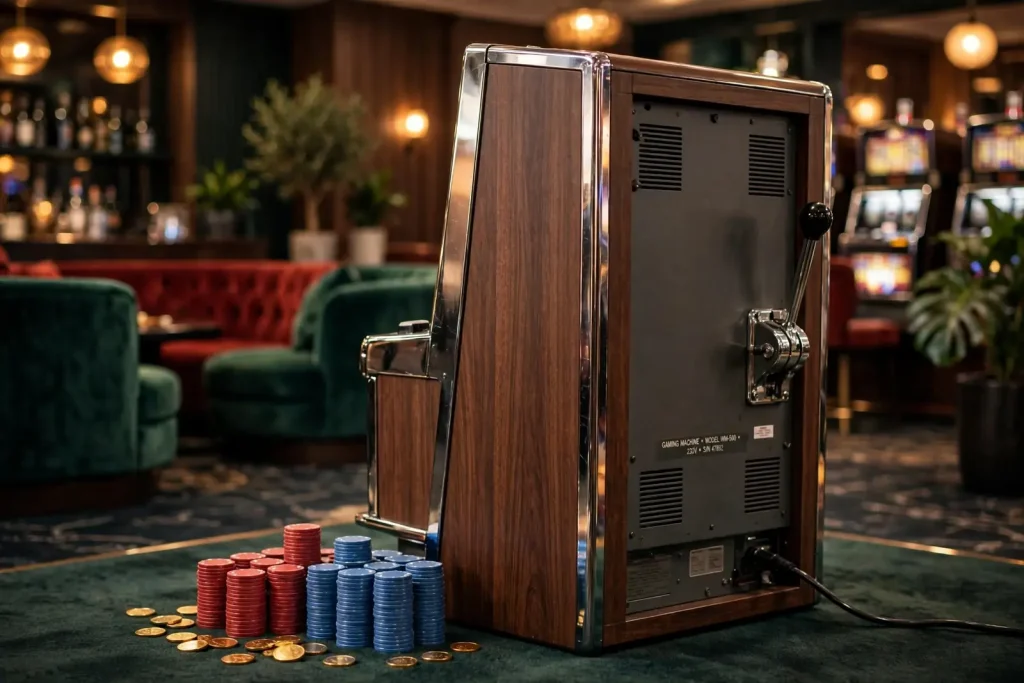
RTP is a long-run theoretical measure, so a higher figure cannot promise wins or explain what will happen in one session.
RTP Is a Long-Run Figure, Not a Promise for Tonight
When I compare slots, RTP is one of the first figures I look for. It can help describe a game’s expected return over a very large amount of play, but it cannot tell me what will happen in a particular session. That distinction sounds obvious until a slot starts behaving badly. Then a published return can feel like a promise the game has broken.
RTP stands for return to player. In broad terms, it expresses how much a game is designed to return relative to the stakes placed over time. It is a theoretical measure, not a forecast for an individual player. The figure does not set aside a share of each spin for you, nor does it mean that your own results will settle neatly around the stated return.
I learned to be wary of the word “high” in gaming copy. It sounds like a practical advantage you can take into a session. What it really describes is a comparison between theoretical figures, not a guarantee about your next run of spins. A higher stated RTP may look more attractive on paper, but it cannot make a win due, prevent a losing streak or tell you when to stop.
The difference is between a long-run model and a short-run experience. A game’s RTP is calculated across extensive play, while your session is only a small slice of that picture. You might finish ahead, fall behind or see results that bear little resemblance to the figure you read. None of those outcomes, on its own, proves that the published RTP predicts personal results.
That is why a search for the highest RTP slots in the UK needs a little care. A headline figure can be useful when comparing information about games, but it is not a ranking of which slot will pay you tonight. Even if one game has a higher stated return than another, that does not tell you which one will produce a better result during your own play. The number is about a theoretical pattern across a great deal of play, not the order in which individual outcomes arrive.
Best Keno Online Casinos in the UK: Licence Checks
I have made the mistake of treating a number as reassurance. I found a figure that looked favourable and let it do the talking, as if choosing that game had made the session less uncertain. It hadn’t. Once I was playing, the only thing I could observe was what happened in that session. The RTP did not explain it in advance or owe me a correction afterwards.
A useful way to read the figure is as a property of the game’s mathematical design, rather than a personal forecast. It can help you understand what a published return is intended to represent. It cannot tell you how much you will get back, whether you will get anything back, or how your results will compare with the theoretical return. Treating it as a short-term promise gives it a job it cannot do.
There is another point that can get lost when attention settles on a return figure: a higher number does not turn gambling into a reliable way to make money. Every game that gives the house a mathematical edge is expected to work against the player across enough play, even if that disadvantage is experienced gradually rather than all at once. That long-run expectation is not a prediction that every session must end in a loss. It means a favourable session can happen without changing the underlying maths.
So when a slot is described as one of the best or highest-returning, I read the claim narrowly. It may indicate that its stated RTP compares favourably with another game’s figure, provided the comparison is like for like. It does not establish that it is the best choice for every player, or that a session will be rewarding. The label can point you towards information. It cannot settle the outcome.
A higher stated RTP is a theoretical comparison, not a guarantee of wins or a way to prevent a losing streak during your session.
I also try not to let the figure become a reason to keep playing. A disappointing run does not mean a slot is about to make up the difference, and a promising result does not mean the theoretical return has been beaten for good. Those are stories we can tell ourselves after the fact. They do not make the next outcome predictable.
RTP is worth understanding because it puts a game’s advertised return into context. It is not worthless; it is simply narrower than the language surrounding it can make it sound. Use it to interpret a long-run measure, not to estimate what you personally will win. Keep that boundary clear, and “high RTP” becomes a description rather than a promise.
Still uncertain.
How to Check a UK Online Casino Before You Play
Before I look for a particular slot, I check who is actually offering it. A polished lobby, familiar game-provider logos and a confident “trusted” badge can make a site feel established, but none of those tells you whether the operator is authorised to serve players in Great Britain. The operator matters first; the game comes after.
The UK Gambling Commission regulates gambling in the UK, including online casinos. For remote gambling offered to people in Great Britain, the operator’s location and the location of its equipment do not remove the licensing requirement. A business based elsewhere can still fall under the rules if it is offering gambling to consumers here. That is the bit I used to overlook when a site looked professional. Appearance is not permission.
Video Slots in the UK: How the Games Work
Check the operator, not just the casino name
A casino brand and the business responsible for running it are not always presented as the same thing. Find the operator’s legal name and licensing information on the site, then look that business up on the UK Gambling Commission’s public register. I would not rely on a logo in the footer alone. It is the operator’s status that matters, so make sure the details point to the business behind the service rather than a vaguely similar company.
A current operating licence is essential for a legal online casino serving UK players. The Commission issues operating licences to businesses, while personal licences apply to individuals working in gambling operations. Those are different kinds of licence. When checking a casino, focus on whether the business has the relevant operating authorisation; a reference to an individual’s licence does not answer that question.
The Commission is the sole regulator for commercial gambling in Great Britain. That gives you a clear place to verify the operator rather than trying to judge a site from its own assurances. If the details are hard to find, inconsistent, or do not match the register, I would pause instead of depositing and hoping it sorts itself out later.
Why the check comes before the slot list
People often start with a hunt for the highest-return slot, or a list of games that pair high RTP with low volatility. I understand the impulse. I have also spent too long comparing game tiles before checking the more basic question: who is taking the bet? A game’s name or provider does not establish that the casino offering it is licensed.
Pre-Play Operator Check
- Identify the legal business operating the casino.
- Find that business on the UK Gambling Commission’s public register.
- Confirm that the licence details relate to the same operator and service you are considering.
- Stop if the business identity or licensing information cannot be matched clearly.
That order matters because the operator is responsible for providing gambling to you under the relevant regulatory framework. A slot can appear in a familiar-looking lobby, but the lobby alone cannot confirm the operator’s authorisation. Check the business first; only then does it make sense to compare the games it offers.
I also separate an operator’s licence from its marketing language. Words such as “safe” or “trusted” are claims, not proof by themselves. The register is a more useful starting point because it lets you check the business against the regulator’s records. If something does not line up, do not treat a reassuring banner as a substitute.
A simple pre-play check
Before opening an account or depositing, I would:
- Identify the legal business operating the casino.
- Find that business on the UK Gambling Commission’s public register.
- Confirm that the licence details relate to the same operator and service you are considering.
- Stop if the business identity or licensing information cannot be matched clearly.
This is not a way to predict whether a session will go well. It is a way to avoid choosing a site on presentation alone. I used to treat the licence footer as decoration and move straight to the games. That was backwards.
Once the operator checks out, you can look at the slot catalogue with a clearer idea of who is offering it. That still does not make a headline return figure a promise, and it does not make every game alike. It simply puts the basic question in the right place: verify the casino before you spend time choosing a slot.
Casino Games: Slots, Live Tables and Game Guides
What Changes Between One Slot Game and Another
Two slot games can look similar at a glance and still ask you to make quite different choices. The reels may move in the familiar way, but the layout, the way a bet is applied and the rules for forming a winning combination all affect what happens on screen. That matters when you compare games; a search for the highest-return slot does not tell you whether its setup will suit how you like to play.
Start with the reel arrangement. Some games use a conventional grid, while others change the shape or movement of the reels as play unfolds. A 5 reel slot game can apply a bet across all five reels, but that does not mean every game with five reels handles its bets identically. Look at the game’s own instructions before you start. The picture alone is not the rulebook.
How the layout shapes a spin
Reels are only part of the display. Symbols can land in positions that count in different ways, depending on the game’s rules. In one slot, a win may depend on symbols lining up along a marked route. In another, the game may assess groups of matching symbols across the grid. Those patterns can make two games feel very different, even when both show spinning reels.
Animations and a busy layout can make it tempting to focus on the spectacle rather than the actual conditions for a win.
I used to assume that more activity on the screen meant I understood the game better. I didn’t. A line drawn across the reels is easy to follow; a busier layout can take longer to read, and animations can make it tempting to focus on the spectacle rather than the conditions for a win. Take a moment with the paytable and instructions. That small pause beats guessing.
The bet controls deserve the same attention. Check whether the amount you select applies to the whole game, to each line, or to another part of the layout. A displayed stake can be easy to misread if you assume every slot calculates it in the same way. The game’s help screen should explain how the selection works and what counts as an active bet.
This is a practical distinction, not a ranking. A more elaborate reel setup is not automatically a better choice, and a simpler screen is not proof of a higher return. If you are comparing games advertised as having high RTP, keep the game mechanics separate from the return figure. One describes the rules and layout you interact with; the other is a different measure. Neither tells you that one screen will produce a better result for you in a particular session.
Bet structure is part of the design
A game may let you adjust a bet, choose among available options, or apply it across the full reel set. The exact controls vary, so don’t carry assumptions from one slot into another. Read the displayed stake carefully before starting a spin, especially after changing a setting. I learned that the interface can make a selection feel obvious when it isn’t.
3-Reel Slots in the UK: What Sets Them Apart
It also helps to distinguish the amount you choose from the way the game evaluates its symbols. The bet controls determine what you have selected; the paytable explains which combinations and positions the game recognises. These are connected parts of the experience, but they answer different questions. If the screen is unclear, open the game information rather than trying to infer the rules from a few spins.
When looking at online slot games with high stated RTP, it is natural to want a neat list of winners. But reel count and bet structure alone cannot establish which game has the highest return. Nor does a label such as “more ways to win” tell you, by itself, what a particular bet will do. Treat promotional wording as a description to check, not a substitute for the rules.
I now compare the layout before I commit to a game: how the reels are arranged, how the selected bet is applied and where the game explains its winning combinations. It is not glamorous research. It does stop me confusing a lively screen with a clear set of rules. That’s enough.
Online Slots: Check the Rules as Well as the RTP
When I compare real money slots, it is easy to get absorbed by the return figure and forget that the game has rules governing how a spin can be played. Those conditions affect your choices at the screen; they do not tell you which slot will pay you back. I learned to check both. They answer different questions.
Do
- Observe the 2.5-second minimum interval between game cycles.
- Check the total stake limit for your age group.
Don’t
- Use autoplay functions, as they are banned for online slots in Britain.
- Assume slot stake limits apply to roulette or blackjack.
A specialist review describes a stake limit for online slots in Great Britain: £5 for each game cycle for customers aged 25 and over, and £2 for customers aged 18 to 24. The amount refers to the total stake on a game cycle, rather than a separate allowance for every reel or payline. If a game lets you place a bet across multiple lines, that does not mean each line gets its own limit.
The same specialist review says those slot limits do not apply to roulette or blackjack. That distinction matters if you move between game types on one casino site: a slot rule should not be assumed to cover every game in the lobby. I would still read the information shown for the specific game and operator, rather than treating a general description as a substitute for its rules.
There are also limits on how quickly online slots can run in Britain. At least 2.5 seconds must pass from the beginning of one game cycle before the next can start. That applies even if a game presents itself as quick or lets you move straight into another spin. The pause is part of the rules, not a setting you can switch off.
Autoplay is banned for online slots in Britain. So a button that starts a run of spins without you initiating each one is not an option under the rules. I used to think removing the pause between decisions would make a session feel smoother. In practice, it also made it easier to lose track of how long I had been playing. The ban means the next spin needs your action.
Bonus Buy Slots in the UK: How the Feature Works
That does not make every individual decision thoughtful. You can still press spin repeatedly, and a 2.5-second minimum does not turn a slot into a slow game. I now treat the interval as a boundary on the software, not as a prompt to keep playing. If you have picked a slot because its advertised return looks high, it is worth remembering that a slower cycle or a lower permitted stake does not change what that return figure means.
The rules also help explain why the details on screen deserve a look before you start. Check what the game counts as one cycle and how it displays the stake you are about to place. A total stake can be spread across a game’s features, but the rules apply to the cycle as a whole. If the layout is unclear, I would rather pause and read the game information than guess from the size of a button.
This is separate from deciding whether an online casino is suitable to use; the operator and its licence are a different check. Here, the practical point is narrower: slot play has a stake ceiling, a minimum interval between game cycles, and no autoplay. None of those conditions identifies the online slot with the highest RTP in Britain, or guarantees a better result. They tell you how the game may be played. That’s the useful bit.
Slot Play Rules
- A stake ceiling is in place based on the player’s age.
- There is a mandatory minimum interval of 2.5 seconds between game cycles.
- Autoplay is prohibited for online slots in Great Britain.
Our top casino picks for the UK
- ChanzeBonus: Slots Welcome Bonus #1 200% up to €500 · Payout speed: 1-3 business days
- AmunbetBonus: Join now and get 450% up to 2,700 GBP + 450 FS · Payout speed: 1-3 business days
- x3betBonus: Welcome Pack 100% Up to £1.000 + 200 Free Spins · Payout speed: 1-3 business days
- Revery PlayBonus: 100% up to€1,000+ 100 FS · Payout speed: 1-3 business days
- NightLuckBonus: Welcome Pack + 805% Up To 6400€ + 280 FS · Payout speed: 1-3 business days
- BritsinoBonus: Welcome Package – Get your £2,200 + 2,000 FS · Payout speed: 1-3 business days
Slot Machines and the Features Behind Their Paytables
A slot machine’s paytable is the bit I check before I get distracted by the animations. It shows which symbol combinations pay and, where the game has them, how features such as wilds, scatters, jackpots and bonus rounds fit into the design. That tells you what the game is built to do. It does not, by itself, tell you what a session will return.
Start with the reels and the lines or other ways a win can be counted. A 5 reel slot game may apply a bet across all five reels; the paytable then explains which combinations qualify and what they pay at the selected stake. Don’t assume that a bigger-looking screen means more chances to win. Check how the game defines a winning combination, whether symbols need to land in a particular order, and whether a feature has its own conditions.
Paylines can be fixed or adjustable, depending on the game. The paytable is where I look for the distinction: does the stake cover every line, or does the game let you change which lines are active? If a slot has a special symbol, its description matters too. A wild may substitute for other symbols, while a scatter may trigger a feature under the rules shown by the game. Those labels are not enough on their own; the actual paytable explains what each symbol does.
Fruit Machine Slots UK: Games, Stakes and RTP
Jackpots need a closer look. A fixed jackpot has a stated prize structure, while a progressive jackpot draws from a pool that can change as play contributes to it. They are different designs, not proof that one slot has a better return. I’ve made the mistake of treating a large jackpot display as a clue that the rest of the game must be generous. It isn’t. Read the ordinary wins and feature rules as well.
Bonus rounds can also alter the shape of a paytable. Some games describe free spins, pick-style features or multipliers; the key is to find out what triggers the round and how its rewards are calculated. A multiplier can increase an eligible win, but it does not tell you how often the feature appears. Flashy presentation, thin detail. That’s the point where I slow down.
There are patterns, but they are not a shortcut to choosing a “best” machine. Low-volatility slots typically have five reels and at least twenty-five paylines, fixed jackpot amounts rather than progressive pools, and bonus rounds that multiply accumulated wins. Treat that as a description of a common design pattern, not a rule that every slot follows or a ranking by return.
When comparing casino slot machines, I’d use the paytable to understand the rules, not to guess a winner from the artwork, reel count or jackpot label. A clear description lets you see what combinations and features the game recognises. The return figure is a separate detail, and the machine’s features cannot replace it. Nor does a familiar feature guarantee that two games with similar layouts behave alike.
Common Low-Volatility Design Patterns
Low-volatility slots typically feature five reels, at least twenty-five paylines, fixed jackpot amounts rather than progressive pools, and bonus rounds that multiply accumulated wins.
That’s why I don’t trust a “top” machine claim based only on a row of reels or a bonus banner. Look at the game’s own paytable and stated return information together, and keep the two questions separate: what can happen in the game, and what its published return figure represents. A paytable can answer the first much better than the second.
High RTP, Low Volatility: What a Session Can Feel Like
RTP and volatility describe different things. RTP is about a game’s stated return over time; volatility is about the pattern of wins you may encounter while playing. A slot can be described as both high-RTP and low-volatility, but those labels do not mean you have found a dependable way to win.
Low-volatility slots tend to spread returns across more frequent, smaller wins. High-volatility games tend to pay less often, with larger wins when they do land. That changes the feel of a session: one may offer a steadier trickle of winning combinations, while the other can leave longer quiet stretches between payouts. Neither rhythm tells you what will happen in your next run.
Across most low-volatility titles, winning combinations typically appear every three to six spins on average. I’d be careful with that wording: it describes a broad pattern, not a timer. You can go several spins without a win, or see one sooner. I’ve made the mistake of treating frequent small hits as evidence that a game was looking after my balance. It wasn’t. A win can still be smaller than the stake that led to it.
That is why “low volatility” is not another way of saying “safe”. It can make play feel less lurching, but it does not guarantee that your balance will hold steady. Nor does pairing low volatility with a high RTP turn the combination into a promise of profit. The two labels answer separate questions: one concerns the stated return over time, the other the distribution of wins.
When comparing games, look at both descriptions, then decide whether the likely pace suits you. If frequent smaller wins sound more comfortable than waiting for occasional larger ones, low volatility may fit your preference. If you are chasing a particular result, though, the label cannot tell you when it will arrive. I’ve learned not to confuse a session that feels busy with one that is paying well.
No magic setting.
Pragmatic Play Slots: Don’t Treat the Provider Name as a Return Figure
Pragmatic Play is a game provider, not a return setting. Seeing its name on a slot tells you who made the game; it does not tell you what that particular title returns over time. I used to treat a familiar provider label as a kind of shortcut. It isn’t one.
That matters when you’re comparing claims about the highest-RTP Pragmatic Play slots in the UK. A provider’s catalogue can include different games, and the name alone cannot rank them by return. Nor does a confident-looking list become meaningful just because every entry carries the same provider badge. “High RTP” is a description that needs to relate to a specific game, not a reputation borrowed from its maker.
Do not treat a provider’s name as a return figure; a studio’s catalogue can include many different games with varying RTP settings.
I’d look at the individual title’s published game information rather than assume all games from one studio share a figure. Check that the details refer to the exact version available where you play, too. A broad claim about a provider may blur together games with different settings, so it can leave you with little useful information about the slot you are actually considering.
Even a stated return figure is not a forecast for your next session. It describes a mathematical expectation over extended play, not a result you can call in advance. If a game has a positive house edge, its mathematical expectation is negative across enough play, whether losses arrive slowly or in a rough patch. A provider name does not change that.
I also wouldn’t confuse a page full of slot titles with a reliable ranking. If it doesn’t connect each claim to the particular game and its own published details, the list may sound more precise than it is. The badge is not the data.
The same caution applies to searches that mention other providers, including Hacksaw Gaming. The studio name can help you identify who produced a game, but it cannot establish that the game has the highest return. Compare the specific slot, not the label.
So when a Pragmatic Play title catches your eye, treat its provider as a starting point for identification, not proof of a better return. I’ve learned not to let a familiar name do the checking for me. That shortcut costs attention.
Is There One Slot With the Highest RTP?
I wouldn’t crown one game as the slot with the highest RTP in the UK without being able to make a like-for-like comparison. A title on its own is not enough: the claim needs to relate to the actual game being offered, and a number should be attached to that specific version. Otherwise, “highest” is just a confident-sounding label.
That distinction matters when you’re choosing where to play. A casino with the highest RTP is not automatically a meaningful category either. The casino provides access to games; the return figure belongs to a particular game, not to the building, brand or lobby as a whole. I’ve made the mistake of treating a bold claim on a page as if it settled the comparison. It didn’t.
So, what is the highest RTP slot? There isn’t a responsible single answer I can give as a universal winner. I would need a consistent set of figures for the games being compared, and a clear basis for deciding which versions count. Without that, naming one would dress a guess up as a ranking.
There is another catch in the word “best”. Even if a slot has a high stated return, that does not make it a route to profit. Where a game gives the house a positive edge, the maths favours the house over enough play, however gently that disadvantage may show itself. A high figure does not erase that.
The Highest RTP
No single slot is a universal winner, as "highest" depends on the specific game version and a like-for-like comparison of figures.
If you see a slot advertised as “the highest”, pause over what the statement actually identifies. Is it naming a specific game and version, or merely leaning on a broad label? Does the comparison tell you what it is being compared with? If those details are unclear, the superlative is doing more work than the evidence.
I’d rather leave the crown empty than pretend there’s one definitive answer. Compare a stated figure only when it is tied to the exact game you can access, and treat the result as a comparison—not a prediction of what your session will return. No magic winner.
Live Casino Games and Roulette: The House Edge in Practice
Roulette is a live casino game, not a slot, so its wheel and betting layout are a different way to think about casino play. I used to see a payout printed beside a bet and treat it as a clue to how generous the game was. It isn’t enough on its own; the wheel format matters too.
European roulette has 37 pockets: numbers 0 through 36. French roulette also uses a 37-pocket wheel, with a green zero and numbers 1 through 36. American roulette adds a double zero, bringing the wheel to 38 pockets. That extra pocket changes the set of possible outcomes, even though the familiar betting choices may look much the same on the table.
You place your bets before the ball is released. A straight bet on one number pays 35:1 if it wins. Covering more numbers brings smaller payouts: a split bet on two adjacent numbers pays 17:1, while a street bet covering three consecutive numbers pays 11:1. A corner covering four numbers pays 8:1; a six-line covering six pays 5:1. Outside bets such as red or black, odd or even, and low or high pay 1:1. Dozens and columns pay 2:1.
Those figures describe the payout for a winning bet, not a promise about what you will get back across a session. The green zero is the detail I used to overlook when I focused on the bigger-looking payouts. A bet covering many numbers can feel safer, but the payout is smaller when it lands.
If you’re comparing casino games while looking for a slot with the highest RTP, keep the categories separate. Roulette’s wheel and payout structure don’t make it a slot, and those payout ratios aren’t slot RTP figures. A live dealer adds the table setting; it doesn’t remove the wheel’s pockets or change what a winning bet pays.
Read the layout before placing a chip. Small detail. Big difference.
The Highest-RTP Slot Claim Still Needs a Caveat
A headline return can make one game look like the obvious pick, but it cannot tell you what will happen during your own play. Even a stated figure attached to the highest-returning slot in the UK describes a long-run calculation, not a personal forecast or a promise that a session will end in profit.
I’ve made the mistake of treating a bigger number as though it settled the decision. It doesn’t. A slot can have a positive house edge, which means that over enough sessions its mathematical expectation for the player is negative. How slowly that plays out is no guarantee that it will feel manageable, or that your results will match the average.
So take “best” as a narrow label, not a verdict. A headline RTP may help you compare published game information, but it cannot establish which slot will pay you more, or when. It also says nothing certain about the result of the next spin. That’s the bit I used to skip.
If you’re weighing up a game, read its own displayed information rather than relying on a broad claim about the highest RTP slot. Keep the figure in perspective, decide what you can afford to lose, and don’t chase a result because a number looks reassuring. No headline changes the maths.