
3-Reel Slots in the UK: What Sets Them Apart
 Available in GB
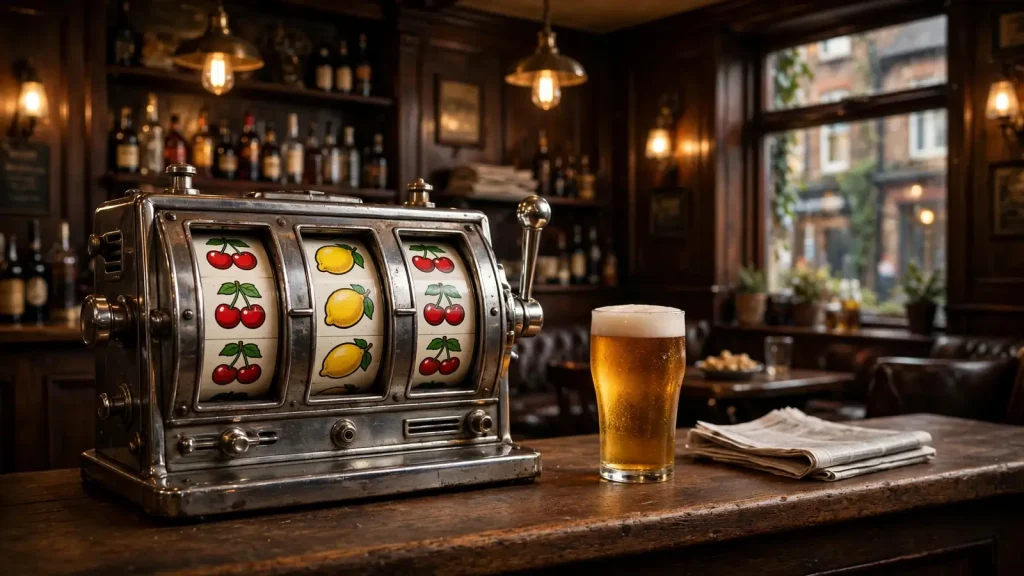
Three visible reels shape the format, but paylines, odds, features and the distinction between free play and real-money play matter too.
What Makes a Three-Reel Slot Feel Different
A three-reel slot gives you a smaller, more immediately readable layout than the sprawling screens many modern games use. You open it and the format is clear: three vertical reels, symbols arranged across them, and a result formed when the reels stop. There is less visual furniture competing for your attention. That simplicity is the appeal for some players; for others, it can feel bare.
I’ve always found the first few seconds with a classic-style game tell you a lot about whether you enjoy its pace. There is no long tour of menus to understand the basic premise. You can look at the reels and recognise the central action. That doesn’t mean every three-reel slot works identically, or that the reel count tells you everything about the rules. It only describes one visible part of the game.
That distinction matters when you’re browsing for three-reel slots online. The label can help you narrow the field, but it is not a promise of a particular mood, feature set or level of simplicity. One game may lean hard into a traditional machine appearance; another may use the same basic reel count while presenting itself in a more modern way. I’ve made the mistake of assuming a familiar layout meant I already knew how a game worked. It didn’t.
A smaller canvas, not a shortcut
The compact layout can make a game feel direct. You are not scanning a wide grid or trying to follow a stack of animated features around the screen. Your eye tends to stay on the reels, and the outcome is easy to take in at a glance. For a quick look at the format, that can be refreshing.
But “simple to look at” is not the same as “simple in every respect”. The reel count alone does not tell you how the game’s rules are set out, what combinations matter, or how a particular result is calculated. Those details belong to the individual game. I now treat the three-reel label as a description of the screen, not a shortcut for understanding the whole thing.
Bonus Buy Slots in the UK: How the Feature Works
It also doesn’t mean the game is old, low-tech or lacking in design. A three-reel layout can be presented with crisp graphics and modern sound, just as a familiar-looking cabinet can have its own quirks. The classic impression often comes from the shape and restraint of the screen, rather than from any guarantee that the experience reproduces an old physical machine exactly.
What “three reels” actually tells you
At its most literal, the phrase means the game’s layout is built around three reels. That gives you a useful starting point when comparing 3-reel slots with games that show more columns, but it doesn’t settle every question a player might have. Two titles sharing the same reel count can still feel quite different once you see their presentation and read their rules.
I try not to confuse visual familiarity with predictability. A compact screen may be easier to follow, but it doesn’t make outcomes easier to forecast. Nor does a small layout automatically mean a smaller or safer experience. The screen can look tidy while the game still has rules you should understand before deciding whether it suits you.
That’s why “best” is a slippery word in a search for the best 3-reel slots in the UK. If you like a stripped-back display, you may value one thing; if you want more visual activity, you may prefer something else. There is no universal winner hidden inside the reel count. The useful question is whether the game’s pace and presentation feel right to you, once you have checked what it actually does.
I used to pick games by their thumbnail and assume the format would do the rest. A few minutes later, I’d be clicking through rules I should have read first. Not clever.
Choosing by feel, then checking the details
When I browse classic three-reel slots, I start with the screen itself. Does it look clean or cluttered? Can I follow what is happening without hunting around? Does the presentation feel appealing after the novelty wears off? Those are personal reactions, not evidence that one game is mathematically better than another.
Do
- Check the game information and rules
- Verify the operator’s licence on the public register
- Set a personal financial limit before playing
Don’t
- Assume a familiar layout means you know the rules
- Use credit cards for gambling
- Treat demo wins as real money
After that first impression, I check the game information rather than filling gaps with assumptions. Reel count is a handy filter, but it cannot tell you the full rules or whether you will enjoy the pacing. Even a traditional design can have details that are not obvious from its opening screen.
So the appeal of three reels is mostly about focus: a familiar, compact frame that puts the central action in view. If that is what you want, the format is worth exploring. Just keep the label in its proper place. It tells you how many reels the game is built around—not whether it is the right choice for you.
Our top casino picks for the UK
- ChanzeBonus: Slots Welcome Bonus #1 200% up to €500 · Payout speed: 1-3 business days
- AmunbetBonus: Join now and get 450% up to 2,700 GBP + 450 FS · Payout speed: 1-3 business days
- x3betBonus: Welcome Pack 100% Up to £1.000 + 200 Free Spins · Payout speed: 1-3 business days
- Revery PlayBonus: 100% up to€1,000+ 100 FS · Payout speed: 1-3 business days
- NightLuckBonus: Welcome Pack + 805% Up To 6400€ + 280 FS · Payout speed: 1-3 business days
- BritsinoBonus: Welcome Package – Get your £2,200 + 2,000 FS · Payout speed: 1-3 business days
Classic Machines, Fruit Symbols and the Old-School Feel
When people picture a three-reel slot machine, they often imagine a compact cabinet, a short row of reels and familiar fruit symbols. That picture still shapes how online versions are described, even when the game is displayed on a phone or computer rather than a physical machine. The old-school feel comes as much from the symbols and uncluttered presentation as from the number of reels.
Fruit imagery is the shorthand. Cherries, lemons, oranges and watermelons are easy to recognise at a glance, so the screen feels legible before you know anything about the game. Bars, bells and lucky sevens belong to the same visual vocabulary. It is direct, almost blunt. I understand the appeal: there is less to decode than on a screen crowded with characters, side games and animated prompts.
Low-Volatility Slots in the UK: What to Know
That does not mean every game with three reels is a faithful copy of a pub or arcade machine. Online developers can borrow the familiar fruit-slot look while presenting it in a polished digital interface. Some keep the display spare; others add sound, movement or decorative effects around the reels. The styling can suggest a vintage machine without reproducing the exact experience of pulling a physical lever. A familiar coat of paint is not the same thing as a particular set of rules.
The phrase “3 reel slot games” covers a broad visual category, not one standard design. One title may lean hard into fruit symbols and simple framing, while another uses different icons and a more modern presentation. Even the label “classic” can be more about atmosphere than mechanics. I’ve learned not to assume that a nostalgic look tells me how a game works. The screen tells you what it looks like; the game information tells you what its rules are.
That distinction is useful when browsing games online. If you want the old-school mood, look at the actual screen rather than relying on a thumbnail or a promotional phrase. Are the symbols readable? Is the layout as plain as you hoped, or does it have extra visual layers? Does the animation feel restrained or busy? These are small questions, but they help separate a genuine preference for a simple-looking game from a general fondness for retro imagery.
UK Casino Sites for Slots: Licensing, RTP and Rules
The same applies to searches for three-reel machines in the UK. Online, “machine” often refers to a digital slot styled after a familiar cabinet, not a physical machine in front of you. You can find games that evoke the fruit-slot tradition without being identical to one another. The number of reels gives you one clue about the layout; it does not promise a specific symbol set, sound or feature. I used to read too much into the word “classic”. It is a label, not a rulebook.
If you come across a free version, it can be a low-pressure way to see whether the presentation appeals to you. Try it for the look and feel: whether the symbols are clear, whether the screen seems busy, and whether the pace suits you. Treat that as a preview of the format, not proof that every three-reel title will behave the same way. A demo can answer, “Do I like looking at this?” It cannot tell you that another game with a similar appearance will offer the same experience.
I would also separate nostalgia from quality. Bright fruit and a familiar arrangement can make a slot feel instantly recognisable, but recognition alone does not make it more enjoyable. Sometimes I’ve picked something because it looked like the machines I remembered, then found the presentation less appealing once I spent time with it. That is why a brief look at the game itself is more useful than trusting a “retro” badge.
High-Volatility Slots in the UK: How They Play
The old-school style is best understood as a visual language: fruit, simple symbols, a compact arrangement and a sense of familiarity. Online versions can borrow that language in different ways. Take the look on its own terms, and let the game’s displayed rules—not the nostalgia—tell you what you are actually opening.
Playing for Real Money in Great Britain: Limits and Licensing
When you move from a free version to real-money 3 reel slots, the important change is not the look of the reels; it is that you are dealing with a gambling operator and an actual stake. I used to treat the familiar fruit-machine style as if it were somehow separate from the rest of online gambling. It isn’t. The same licensing rules apply.
The UK Gambling Commission regulates commercial gambling in Great Britain, including online casinos. For remote gambling offered to people in Great Britain, the operator’s location and the location of its key equipment do not remove that requirement. A business selling online gambling to this market needs the relevant Commission operating licence. The Commission is the sole regulator for commercial gambling in Great Britain.
That distinction matters when a site looks polished but its status is unclear. I would not take a logo, a game catalogue or a confident claim on a homepage as proof. Check the operator’s licence details against the Gambling Commission’s public register. A licensed operator is accountable within the British regulatory system; an attractive site design is not a substitute for that.
In Great Britain, the maximum stake for one game cycle is £5 for customers aged 25 or older, and £2 for those aged 18 to 24.
The Commission issues operating licences to businesses and personal licences to individuals who carry out certain roles in the industry. Those are different things: a personal licence is not the permission a casino needs to offer games to customers. When you are checking a site, focus on the business and whether its operating permission covers the gambling it offers.
There is also a stake limit specifically for online slots. A specialist review reports that the maximum stake for one game cycle is £5 for a customer aged 25 or older, and £2 for someone aged 18 to 24. Those are per-cycle ceilings, not recommended amounts and not a guide to what you should spend. The age bands matter: a single headline figure can give the wrong impression if it leaves out the younger group.
A “maximum” is easy to misread as permission or encouragement. It isn’t either. It sets a boundary on the stake allowed for an individual slot cycle; it does not tell you how long a session will last or what the result will be. If you are looking at real-money 3 reel slots, the reel count does not exempt the game from the online-slot rules. A compact layout is still an online slot.
I’d keep the licensing check separate from judging whether a particular game appeals to me. A classic-looking machine can be offered through different operators, and its visual style says nothing by itself about the operator’s regulatory status. Likewise, searching for the best real-money 3 reel slots does not answer the more basic question of whether the casino offering them is licensed for Great Britain.
Progressive Jackpot Slots: How the Prizes Work
This is one reason I’m wary of pages that blur “available to play” with “properly authorised.” A game loading in a browser only tells you that the page works. For real-money play, the relevant operator needs the right licence. Check the actual business name and licence entry rather than assuming that a game provider’s name, or a familiar slot title, establishes who is taking your stake.
Free versions and no-registration demos are a different matter: they do not turn a site into a licensed real-money casino, and they are not a way around the rules for gambling with money.
I’ve found that taking a moment to check the operator is less exciting than opening a game, but it is a better first move. The regulator, the licence and the stake ceiling are practical facts to understand before play, not fine print to discover after something feels off.
Keep it plain. Check first.
Free Online Play Is a Test Drive, Not a Payout
A free demo is useful for one simple reason: you can open a three-reel slot and see how it feels without putting a deposit at risk. You are playing with fake money, not cash in an account. Any wins shown on screen stay inside the demo. They cannot be withdrawn or turned into a real payout.
High-RTP Slots in the UK: How to Compare Returns
That distinction sounds obvious until a game starts celebrating a win with the same lights and sounds it uses in paid play. I’ve caught myself getting carried away by the display, as if I’d actually made something. I hadn’t. The balance was only part of the trial.
What a demo can tell you
Trying free online three-reel slots gives you a chance to get comfortable with the controls and the pace. You can see what happens when you start a round, how the game presents an outcome and whether you enjoy the straightforward layout. If you are curious about old-fashioned three-reel slots but do not want to commit money just to investigate, a demo is a sensible first look.
It is also a way to decide whether a particular game holds your attention. The familiar presentation may appeal at first, but a few minutes of play can tell you more than a promotional image. I find that useful. It saves me from treating every game that looks nostalgic as something I must keep playing.
Still, a demo only answers questions about the experience of playing that version. It does not show that you have found a reliable way to win. A run of favourable results in fake-money play is not evidence that the next session will go the same way, and a string of losses does not mean a win is due. That is the part I used to ignore.
“High payout” is not a demo result
A free classic slot can make it easy to watch the balance rise and fall without feeling the difference between play money and your own. That is precisely why I try to keep the distinction clear. A high balance on a demo screen is not a payout, and it does not tell you what you would take away from real-money play.
Nor can a demo teach a guaranteed method for winning on three-reel slots. You can learn where the controls are and what the game looks like in motion; you cannot practise your way into certainty. If you find yourself thinking, “I’m on a streak, so I know what comes next,” pause. The demo has not given you that knowledge.
Free play can be a useful test drive, then, but it is a limited one. Treat it as a chance to explore the game without risking a deposit, not as a source of winnings or a forecast of future results. If the fun depends on imagining that demo credits are real, I’d rather close the game and come back another time.
The screen may look convincing. The money isn’t.
Deposits, Bonuses and the Catch in “Free” Offers
Trying a classic three-reel game for free and playing it with a cash balance are different experiences, even when the screen looks the same. A free version does not turn into a real-money game simply because you like it: to play for money, you need an account and a deposit. I’ve learned to pause at that point rather than clicking through because a bright offer makes the next step feel obvious.
Casino Games: Slots, Live Tables and Game Guides
Before depositing, decide what amount you can comfortably set aside and treat it as entertainment spending, not money you expect to win back. A site should prompt new customers to set a financial limit before their first deposit and make account-level limit controls accessible. I’d set a limit I can live with before starting, then leave it alone rather than raising it after a losing run. That small pause has saved me from turning a casual session into an argument with myself.
You’ll also need to verify your age before an operator lets you deposit. For payment, UK-licensed casinos cannot accept credit cards for gambling, including credit-card funding routed through a money service business. A wallet that lets you use credit-card funds for gambling is not a workaround either. Check the payment method’s terms before relying on it; a familiar logo does not guarantee that every funding route is accepted.
Bonuses deserve their own pause. “Free” can mean an offer tied to a deposit, rather than money handed over with no strings attached. The headline may look generous, but the conditions decide what you must do to claim or use it. Read those before depositing: check which games count, whether the offer has a deadline, and what happens if you opt out. If the terms are hard to find or unclear, I’d rather skip the offer than guess.
A specialist review reports that bonuses can have a 48-hour lifespan. That is a short window, but it is not a rule to assume applies to every casino or promotion; the offer’s own terms are what matter. I’ve missed deadlines by assuming I could come back later, and I’ve also accepted offers without first checking whether I wanted the restrictions that came with them. Neither mistake made the game more fun.
If an offer includes free spins or bonus funds, check whether you must activate it and whether accepting it changes the conditions on your account. Don’t infer the rules from the word “bonus”. A no-deposit promotion, a deposit match and a free-play demo are not interchangeable: one may be an account offer, while a demo uses fake money and pays nothing out. The details should say plainly what you receive and what, if anything, you need to do.
For 3 reel slots online for real money, the useful comparison is not the size of the offer graphic. It’s whether you understand the payment method, the limit you’ve chosen and the bonus terms before money leaves your account. I now read that small print first. Less exciting. Much clearer.
Paylines, Odds and What a Reel Count Does Not Tell You
When I first started looking at 3 reel fruit machines, I treated the reel count as if it told me most of what I needed to know. It doesn’t. Three visible reels describe the layout, not the number of ways a win can form, how a stake is allocated, or how often a particular result might appear. Those details belong to the individual game’s rules.
Paylines are the routes that the game recognises for winning combinations. On one slot, you may be able to see a small set of marked lines; on another, the rules may work differently. Don’t assume a three-reel layout means there is one payline, or that every line runs straight across the middle. Open the paytable and game information before playing. That is where the slot explains which symbol patterns count and what the available lines do.
The same caution applies to a 3 reel slot machine’s odds. Reel count alone cannot tell you the probability of a particular combination, the return profile, or whether a game is more favourable than another. A familiar fruit-symbol layout can look easy to read, but appearance is not a mathematical guide. I’ve made that mistake: a simple screen felt easier to understand, so I started trusting it more than I should have. Not the same thing.
Best RTP Casino Slots in the UK: What RTP Means
Check how the game describes its paylines and payouts, and distinguish those rules from the amount you choose to stake. A five-reel slot may apply a bet across all five reels, but that fact says nothing by itself about the payline rules or odds of a three-reel game. A wider layout is not automatically more generous, and a compact one is not automatically easier to win on. Read the specific rules rather than trying to infer them from the cabinet-style presentation.
The paytable can also clarify whether a combination needs to land on a particular line and which symbols are involved. If the explanation is unclear, that is a reason to pause rather than guess. I used to click through because I thought the mechanics would become obvious once the reels started moving. Sometimes they did; sometimes I had no idea why a result counted. Better to know what the game is counting before you stake anything.
Odds should not be confused with a run of wins or losses. A few spins do not establish what a slot will do over time, and a string of near misses is not evidence that a win is due. The result of an individual spin does not promise anything about the next one. That can be frustrating. It is still how chance works.
The longer-run point is less exciting but more useful: where a game has a positive house edge, its mathematical expectation is negative over enough sessions. It does not matter whether losses arrive slowly or in abrupt patches; a particular reel layout does not remove that underlying disadvantage. That does not predict exactly what will happen in your own session. It does mean that paylines and reel count should be read as game mechanics, not as a route to guaranteed returns.
No-Download Play, No-Deposit Play and Video Slots
These labels describe different things, though casino pages often place them side by side. I used to read them as one promise: open a game instantly, play for free and get the old-fashioned reels. They are not the same claim.
“No download” is about how you access a game. It generally means you can open it in a browser rather than install a separate game file or app. That says nothing by itself about whether the game is free, whether it uses three reels or whether it has a video-slot presentation. The game still needs to load, and the label does not tell you what will be available once it does.
No-download
This refers to games that can be accessed directly in a web browser without the need to install separate files or applications.
“No deposit” describes the money requirement attached to access, not the game’s design. A three-reel game offered without a deposit could be a free-play version, or the phrase could refer to a particular promotion. The wording alone does not tell you which. I’ve learned to check what the offer actually lets you do instead of treating “free” as a useful description on its own.
If you are trying a free version, keep the distinction clear: it uses fake money, and it does not award real payouts. That can still be useful for seeing how a game looks and behaves, but it is not the same as playing for real money. No payout. No mystery.
“Video slot” is a description of presentation, while “three-reel” describes the visible reel count. One term does not settle the other. A slot can present its symbols through a video display without the phrase telling you how many reels it has; equally, seeing three reels does not establish that a game belongs to a particular category of video slot. Read the game’s own details rather than guessing from its label.
When I compare a browser-based three-reel game with a video slot, I first separate access from format. Browser play tells me how I open it. A no-deposit label tells me something about the stated entry condition. The reel layout and presentation tell me what kind of game I am looking at. Those are separate checks, not a bundle.
That matters because none of these labels says that one format is more rewarding. A simple screen may appeal to you; a more elaborate presentation may not. Neither the absence of a download nor a low reel count is evidence of better returns. I look at the game itself, not the sales wording.
A Three-Reel Slot in Practice
When I open a three-reel slot, the reels are the first thing I notice: a compact row of vertical windows, with the symbols moving when a spin starts and settling into a new arrangement. The layout is easy to take in at a glance. There is less of the broad, busy screen I associate with many modern slots, though the exact presentation depends on the game.
Around the reels, I look for the controls before pressing anything. A game may show a spin button, a stake setting and a display for the current balance. Their position and labels vary, so I take a moment to see what each control does rather than tapping through on habit. I have made that mistake before. Not ideal.
Once the reels stop, the screen shows the result. Some games make the outcome clear with a line or a highlighted combination; others use a short animation or message. I do not assume that a particular arrangement pays just because it looks familiar. The game’s own information panel explains what its symbols and winning combinations mean, and that is where I check the rules for that specific title.
Summary
- A three-reel layout describes the screen, not the rules or odds
- Always verify an operator’s licence before playing for real money
- Use free demos to test the feel and controls without risk
- Treat bonuses and “free” offers with caution by reading the small print
The pace can feel direct: set the stake, start a spin, watch the reels settle, then decide whether to continue. That simple sequence is part of the appeal, but it can also make repeated play feel automatic. I try to notice whether I am still choosing each spin deliberately or merely pressing the same control again.
A three-reel slot is therefore straightforward to look at, not necessarily identical from game to game. The screen gives you the basic view; the rules panel fills in what the display alone cannot tell you. Before playing, I check both. A familiar layout is no substitute for knowing what is on screen.
The Classic Three-Reel Slot: Simple Look, No Guaranteed Edge
A classic three-reel slot can look reassuringly plain. You see a small layout, familiar symbols and a result that is easy to read at a glance. I get why that can feel less intimidating than a busier game. But a clean screen is a presentation choice, not evidence that the game is easier to beat.
I used to treat a simple-looking result as if it meant I could judge what was coming next. I couldn’t. A run of wins, or a long stretch without one, doesn’t turn the next spin into a predictable event. The appearance may be old-school; the outcome is still governed by the game’s maths.
That distinction matters because “classic” can sound like a promise of fairness or steady returns. It isn’t. A slot with a positive house edge has a negative mathematical expectation for the player over enough sessions. Whether losses arrive slowly or in a rough patch, the long-run direction does not change. A tidy screen can’t cancel that out.
I now try to separate what I like about a game from what I expect it to do. The uncomplicated presentation may suit a quick session, and I may enjoy the familiar style. Neither tells me how long a session will last or what I’ll get back. Those are different questions.
If you open a classic three-reel slot, treat its simplicity as a design feature, not a strategy. Set a limit you can afford to lose, and don’t raise it because the last few spins seemed to “owe” you a result. I’ve made that mistake. It didn’t improve my odds.
Plain look. Same caution.
Classic Slots vs Video Slots: Reels Aren’t the Whole Story
When I compare classic slots with video slots, I try not to treat the labels as a reliable guide to how a game works. “Classic” often describes a familiar, pared-back style; “video” points more towards a digital slot format. Neither word, by itself, tells you how a stake is applied or what a spin can do.
Reel count is only one visible detail. A five-reel slot can apply a bet across all five reels, so the stake may relate to the full layout rather than a single reel. That does not tell you how a three-reel game handles its own bets. I’ve made the lazy assumption that fewer reels must mean a simpler bet. It isn’t a safe assumption. The game’s paytable and bet display are where the actual rules belong.
There is overlap, too. A game with a classic look can still be presented digitally, while a video slot need not fit the idea of a busy, complicated screen. The names describe broad styles, not a promise about every mechanic. Check what the game says about its reels and stake before deciding what you’re looking at.
That’s the useful distinction: appearance helps you recognise a style, but the rules explain the play. I used to pick by the picture and only then notice the details. Backwards, really. A three-reel layout may appeal if you want that compact look; a video slot may appeal for its presentation. Neither choice, on its own, tells you how a bet works. The small print does.